Choosing the right Electric Motor is rarely a simple price comparison. Global buyers must match performance, safety, efficiency, and serviceability with the real working environment. A motor running beside a dusty conveyor needs different protection from one driving a clean-room fan. Voltage, frequency, load profile, starting torque, duty cycle, noise, and ambient temperature all influence the final decision.
This guide examines ten widely used motor types, including AC induction, synchronous, brushed DC, brushless DC, stepper, servo, universal, gear, switched reluctance, and linear motors. Each type offers practical strengths. AC induction motors suit pumps, compressors, and factory conveyors. Servo motors provide precise motion for robotics and packaging equipment. Stepper motors deliver controlled positioning, although heat and missed steps can become serious concerns. Brushless DC motors support compact, efficient designs, but their electronic controllers increase system complexity.
Real purchasing experience shows that specifications alone do not guarantee success. A motor may meet its rated power yet fail under frequent starts, poor ventilation, or unexpected overloads. Small details matter. Check the shaft size. Confirm the mounting pattern. Review IP protection, insulation class, bearings, warranty terms, and replacement availability. Regional voltage standards and technical documentation also deserve careful attention.
There is no universal winner. Some choices remain judgment calls. Buyers should compare tested application data, manufacturer credibility, efficiency requirements, and long-term maintenance costs before placing an order. This overview provides a practical starting point, while encouraging engineers and purchasing teams to question assumptions before selecting from the top ten Electric Motor types.
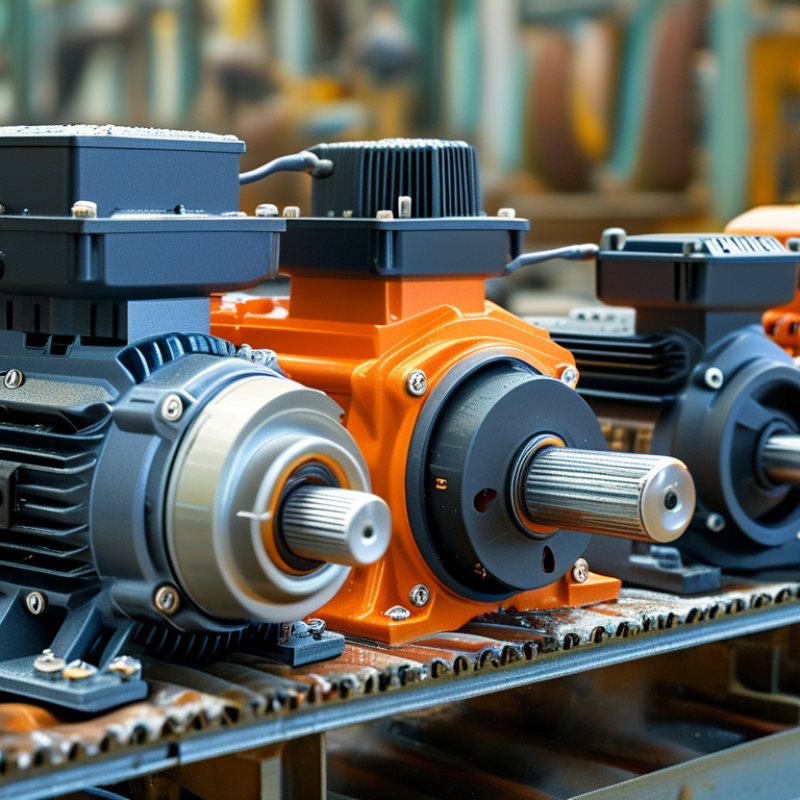
The ten common types include AC induction, synchronous, permanent-magnet synchronous, switched-reluctance, stepper, brushed DC, brushless DC, servo, universal, and linear motors. Each converts electrical energy into motion differently. That difference affects torque, speed control, efficiency, noise, and maintenance.
The IEA’s Energy Efficiency 2019 report estimated that motor systems used about 53% of global electricity. In industry, their share was even higher. This makes classification a practical energy decision.
An induction motor creates a rotating magnetic field and usually needs no brushes. A synchronous motor follows that field precisely. A reluctance motor moves toward the lowest magnetic resistance. A stepper motor advances in controlled increments, but it can lose position under excessive load.
Small details matter.
Brushed DC motors remain simple, though brushes wear during operation. Brushless DC designs reduce mechanical wear through electronic commutation. Servo systems add feedback for accurate positioning. Linear motors produce direct motion instead of shaft rotation. Universal motors provide high starting speed, but their noise and brush wear deserve attention.
These categories overlap in real equipment. The classification is not always perfectly clean. That is where many buying decisions become difficult.
The U.S. Department of Energy’s Industrial Motor Systems Market Assessment notes that motor-driven equipment represents a major industrial energy opportunity. Buyers should compare duty cycle, starting torque, enclosure, cooling, control method, and repair access—not efficiency figures alone.
Top 10 Electric Motor Types for Global Buyers
The Top 10 Electric Motor Types Explained by Design and Function
Brushed DC motors use a commutator and brushes to deliver simple, adjustable rotation. They suit toys, pumps, and small machines, but brush wear requires maintenance. Brushless DC motors replace brushes with electronic switching. Their permanent magnets provide efficient, quiet operation in fans, tools, and compact vehicles. Induction motors use a rotating magnetic field and a rugged squirrel-cage rotor. They tolerate demanding factory conditions, although speed control needs suitable electronic equipment. Synchronous motors lock rotor speed to the supply frequency. Permanent magnets or field windings support precise timing and stable output.
Switched reluctance motors create torque as their toothed rotor follows changing magnetic fields. They withstand heat well, but acoustic noise can be difficult to manage. Universal motors combine series windings and operate with alternating or direct current. Their high starting torque helps portable equipment, though they can sound harsh. Stepper motors move in controlled angular increments. Their toothed structure supports positioning without feedback, but missed steps remain possible under excessive load. Servo motors combine a motor, sensor, and controller. This closed-loop design corrects position and speed errors during motion.
Linear motors produce direct straight-line movement instead of rotary output. They are useful for stages, conveyors, and automated positioning systems. Shaded-pole motors use a simple copper shading ring around part of each pole. They are inexpensive and quiet, but offer low starting torque. In field selection, efficiency labels alone can mislead. Ambient heat, duty cycle, load changes, noise, service access, and local electrical standards also matter. I have seen compact motors fail early when enclosure protection was treated as an afterthought. The specification looked correct. The installation was not.
| No. | Electric Motor Type | Power Supply | Key Design | Operating Principle and Function | Main Advantages | Key Limitations | Typical Control Method | Common Applications | Buyer Selection Notes |
|---|---|---|---|---|---|---|---|---|---|
| 1 | Brushed DC Motor | Direct current | A wound armature rotates inside a permanent-magnet or wound-field stator. A mechanical commutator and carbon brushes transfer current to the armature. | Electromagnetic torque is produced by the interaction between the stator field and the energized armature. Speed generally changes with applied voltage, while torque is related to armature current. |
|
|
Voltage control, pulse-width modulation, or a DC drive | Small appliances, toys, automotive auxiliaries, pumps, actuators, and portable equipment | Select when cost, simplicity, and starting torque are more important than brush life, low noise, or maintenance-free operation. |
| 2 | Brushless DC Motor (BLDC) | Direct current through an electronic inverter | Permanent magnets are normally mounted on the rotor, while three-phase windings are placed on the stator. Electronic switching replaces brushes and the mechanical commutator. | The controller energizes stator phases in sequence to create a rotating magnetic field that pulls the permanent-magnet rotor around. |
|
|
Six-step commutation, Hall-sensor feedback, or sensorless electronic control | Fans, pumps, power tools, drones, compressors, robotics, and electric mobility systems | Check controller compatibility, feedback requirements, thermal limits, rated voltage, continuous torque, and the motor's commutation profile. |
| 3 | Permanent-Magnet Synchronous Motor (PMSM) | Usually three-phase AC supplied by an inverter | Permanent magnets are mounted on or inside the rotor, and distributed three-phase windings are installed in the stator. The rotor runs synchronously with the rotating field. | The inverter creates a controlled rotating magnetic field. Rotor magnets remain locked to this field, producing smooth synchronous torque. |
|
|
Field-oriented control, direct torque control, and position-feedback control | Industrial servo systems, compressors, electric vehicles, elevators, machine tools, and energy-efficient pumps | Confirm magnet temperature limits, demagnetization margin, inverter capacity, field-weakening capability, and required encoder or resolver feedback. |
| 4 | Squirrel-Cage Induction Motor | Single-phase or three-phase AC | The stator contains insulated windings, while the rotor consists of conductive bars shorted by end rings. The rotor has no brushes, slip rings, or permanent magnets. | Alternating stator current creates a rotating magnetic field. Relative motion induces rotor current, and the resulting electromagnetic interaction generates torque. |
|
|
Direct-on-line starting, soft starter, or variable-frequency drive | Fans, pumps, conveyors, compressors, machine tools, HVAC equipment, and general industrial machinery | Compare duty rating, efficiency class, service factor, starting torque, enclosure, ambient temperature, and compatibility with the intended drive. |
| 5 | Wound-Rotor Induction Motor | Three-phase AC | The stator is similar to an induction motor, but the rotor has a three-phase winding connected to external circuits through slip rings and brushes. | Rotor resistance can be added during starting to increase starting torque and limit current. The resistance can then be reduced as the motor accelerates. |
|
|
Rotor-resistance starter, liquid-resistance starter, or specialized drive | Cranes, hoists, elevators, mills, crushers, conveyors, and heavy starting-duty machinery | Consider the starting load inertia, acceleration time, enclosure, brush maintenance access, and whether a modern drive can replace the rotor-resistance system. |
| 6 | Synchronous Reluctance Motor | Usually three-phase AC supplied by an inverter | The stator uses conventional AC windings, while the rotor has a laminated, magnet-free structure with directional magnetic reluctance and flux barriers. | The rotor aligns its low-reluctance magnetic paths with the rotating stator field and runs at synchronous speed after being started by the drive. |
|
|
Field-oriented control or other inverter-based synchronous control | Pumps, fans, compressors, conveyors, industrial drives, and energy-efficient process equipment | Evaluate inverter matching, noise limits, minimum speed requirements, overload performance, and whether the application needs high starting torque. |
| 7 | Switched Reluctance Motor (SRM) | DC link supplied through an electronic converter | The stator has concentrated windings on salient poles, while the rotor is a simple laminated steel structure with salient poles and no windings or magnets. | The controller energizes stator phases in sequence. The rotor moves toward the energized pole position that provides the lowest magnetic reluctance. |
|
|
Position-based phase switching with rotor-position feedback or estimation | Fans, pumps, compressors, appliances, traction systems, and specialized industrial drives | Pay particular attention to acoustic noise, torque ripple, controller availability, rotor-position sensing, and the required speed range. |
| 8 | Stepper Motor | Usually DC through a phase-switching driver | A toothed or salient rotor interacts with multiple stator phases. Common designs include permanent-magnet, variable-reluctance, and hybrid stepper motors. | The driver energizes phases in a defined sequence, moving the shaft through discrete angular steps. Microstepping can make motion smoother and quieter. |
|
|
Constant-current chopper driver, full-step, half-step, or microstep control | 3D printers, CNC equipment, scanners, textile machinery, laboratory instruments, and positioning mechanisms | Match step angle, holding torque, acceleration profile, driver current, supply voltage, load inertia, and whether closed-loop verification is required. |
| 9 | Universal Motor | AC or DC | A series-connected field winding and armature use a commutator and brushes. The magnetic field and armature current change together, allowing operation on AC or DC. | The series motor produces torque from the interaction of field and armature currents. It can operate at very high speed with a compact size. |
|
|
Voltage control, phase-angle control, or a dedicated universal-motor controller | Vacuum cleaners, mixers, blenders, hand-held power tools, and some portable appliances | Verify duty cycle, brush life, acoustic requirements, speed regulation, cooling, and compliance with the target market's electrical safety standards. |
| 10 | Shaded-Pole Motor | Single-phase AC | A salient-pole stator contains a short-circuited copper shading ring around part of each pole. The rotor is generally a simple squirrel-cage design. | Current induced in the shading ring delays magnetic flux in the shaded part of the pole, producing a weak rotating field and a starting torque. |
|
|
Direct connection to a single-phase AC supply | Small fans, refrigerator evaporator fans, appliance timers, air vents, and low-power mechanisms | Use only for light starting loads. Check airflow, enclosure temperature, rated frequency, rotation direction, and continuous-duty thermal performance. |
Global buyers often compare ten motor families by efficiency, torque, speed, and control demands. Induction motors suit pumps and conveyors, but their speed changes slightly under load. Synchronous motors maintain speed accurately and can achieve high efficiency. Their controllers require more careful setup. Brushless DC motors deliver strong torque from compact housings, using electronic commutation. Brushed DC motors simplify control, although brush wear becomes important in dusty machinery. Servo motors combine feedback with rapid torque changes, while steppers offer predictable positioning without feedback. Steppers can lose torque at high speed. Switched-reluctance motors tolerate heat, but acoustic noise may affect equipment acceptance. Universal, linear, and axial-flux motors serve more specialized layouts.
Efficiency is not one catalog number. Measure input power, shaft output, temperature, and duty cycle at the real load. A motor rated above 95 percent may perform poorly when oversized. Torque also needs context. Starting, continuous, peak, and stall torque are different requirements. A conveyor needs steady torque. A lift needs controlled acceleration and braking. Speed range also shapes the drive choice. Simple contactors may suit fixed-speed induction motors. Variable-frequency drives add speed regulation and energy control. Feedback sensors improve precision, but wiring and calibration increase maintenance work.
During field evaluations, I record startup current, vibration after warming, and speed under changing loads. This exposes assumptions that datasheets can hide. A stepper may appear economical until missed steps interrupt production. A servo may be excessive for a single-speed fan. I have made that selection mistake. Ambient temperature, enclosure protection, service access, and local electrical rules also matter. A clean datasheet cannot replace testing the complete motor-control system in its actual machine.
Choosing an electric motor starts with the working environment, not the catalog ranking. AC induction motors suit pumps, fans, compressors, and conveyors because they tolerate dust and steady loads. Synchronous motors support large compressors and constant-speed machinery. Permanent-magnet motors deliver high efficiency in compact equipment, including battery systems and precision drives.
Brushed DC motors offer simple speed control for small machines, lifts, and mobile equipment. Brushless DC motors reduce brush wear in fans, medical devices, and automated tools. Universal motors provide high starting torque for portable appliances, but they can be noisy. Stepper motors move in controlled increments, making them practical for printers, valves, and light positioning systems. Servo motors fit robotic arms and packaging machines where feedback and accurate motion matter.
Switched-reluctance motors can handle heat and harsh conditions, although their noise may require careful design. Linear motors create direct motion for inspection tables, transport systems, and precision stages. The boundary is not always clean. A stepper motor may lose position under sudden loads. A permanent-magnet motor may need complex control electronics. Even an efficient motor can waste energy if its speed does not match the process.
Check torque, duty cycle, voltage, enclosure rating, ambient temperature, noise, maintenance access, and available controls. Measure the real load when possible. Paper estimates can mislead. A motor that works well in a dry workshop may struggle beside washdown equipment or in a hot production area. Experienced buyers also review service records, spare-part access, installation skill, and expected operating hours before approving the final type.
Global buyers can choose among brushed DC, brushless DC, induction, synchronous, switched reluctance, servo, stepper, universal, shaded-pole, and linear motors. Each design suits different duties. Induction motors remain practical for pumps and conveyors, while servo motors deliver precise motion. Stepper motors simplify positioning but may lose torque at higher speeds. Brushless DC motors reduce maintenance, yet their controllers increase system cost. In factory sourcing, I have found that the cheapest motor often creates higher wiring and service expenses.
Purchasing decisions should compare voltage, frequency, duty cycle, ambient temperature, noise, and available spare parts. Check efficiency classes, enclosure ratings, insulation systems, and relevant IEC or NEMA requirements. Certification needs may vary by destination, so buyers should verify current requirements with qualified professionals. Ask suppliers for test reports, dimensional drawings, warranty terms, and production samples. A factory audit can reveal inconsistent winding quality, although it cannot guarantee every future batch. Lead time also matters. A low quotation means little if replacement units arrive after a production shutdown.
Tips: Build a total-cost sheet, not only a unit-price list. Compare energy use, controls, freight, maintenance, and expected life. Request the same technical data from every supplier. Small differences matter. Do not ignore local voltage conditions or installation skills. I once underestimated training costs, and the project budget suffered. Recheck assumptions before placing a large order.
Start with the machine’s duty cycle, torque, speed, cooling, enclosure, controls, and repair access. Catalog ranking is not enough.
A rotating magnetic field produces motion without brushes. It suits pumps and conveyors, but speed changes slightly under load.
It follows the magnetic field precisely and maintains accurate speed. Its controller usually needs more careful setup.
They provide compact torque and high efficiency. Electronic commutation reduces mechanical wear, though control electronics add complexity.
Steppers move in controlled increments without feedback. Excessive load or high speed can cause missed positions.
It offers simple control and familiar construction. Brushes wear over time, especially in dusty machinery.
Servo systems use feedback for accurate positioning and quick torque changes. Sensors, wiring, and calibration increase maintenance work.
No. Measure input power, shaft output, temperature, and duty cycle at the real load.
Record startup current, warmed vibration, and speed during changing loads. Datasheets can hide these details.
An oversized motor may waste energy, while an undersized stepper may miss positions. I have made that mistake.
Choosing the right Electric Motor requires more than comparing power ratings. This guide explains the main motor classifications and operating principles, then introduces ten widely used types according to their construction, control method, torque behavior, speed range, and efficiency. Readers will learn how differences between induction, synchronous, brushed, brushless, stepper, servo, and other motor designs affect starting performance, energy consumption, maintenance needs, and system integration.
The article also connects motor characteristics with practical industrial and commercial applications, including automation, pumps, fans, transportation equipment, appliances, and production machinery. It outlines how to evaluate continuous and peak torque, variable-speed control, duty cycles, environmental protection, noise, installation requirements, and lifecycle costs. For global purchasing, the guide highlights the importance of technical specifications, electrical standards, certifications, documentation, delivery capability, after-sales support, and supplier reliability, helping buyers select a safe, efficient, cost-effective motor solution for their operating conditions.
Micprec Motor